Targeting production
Kookynie Tailings
A historical tailings opportunity where recent metallurgical test work has identified a potential gold-recovery pathway, alongside NME’s separate profit-sharing arrangement with WTAC.
Technical context
These figures are dated metallurgical test-work results from two samples. They are not a Mineral Resource, Ore Reserve or production forecast.
Project overview
Testing a recovery pathway.
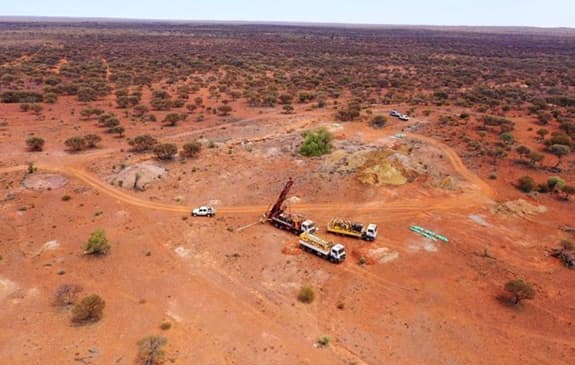
NME’s 6 August 2026 update reported metallurgical test work on two approximately 50-kilogram samples collected from Tailings Dump 4 at Kookynie.
The samples reported head grades of 0.94 g/t and 0.96 g/t gold. Carbon-in-leach test work incorporating a light grind reported gold recovery of 71%, compared with the earlier 52% result. One sample also returned 0.063% WO₃, identified as a potential by-product requiring further evaluation.
These results inform additional evaluation; they do not establish a Mineral Resource, Ore Reserve, economic project or production forecast.
WTAC arrangement
A separate profit-sharing structure.
Under the 21 August 2025 agreement, WTAC is entitled to 35% of net ore-sale proceeds after reimbursable costs, with 65% to NME.
The agreement also addresses cultural heritage, rehabilitation, employment, training and commercial participation. This Kookynie-specific structure is separate from the incorporated 60% WTAC / 40% NME joint venture used for new project opportunities.
Development pathway
Evidence-led evaluation.
- Confirm metallurgical response. Continue representative sampling and test-work design.
- Evaluate potential by-products. Test whether tungsten occurrence is consistent and recoverable.
- Define practical parameters. Assess processing options, approvals, costs and rehabilitation requirements.
- Maintain qualified disclosure. Report dated outcomes without presenting test work as a resource or forecast.
Source disclosures